
Intergenerational conflict: Fighting the Silence
Open Forum DDI Kenya meets Worldwork Journalism
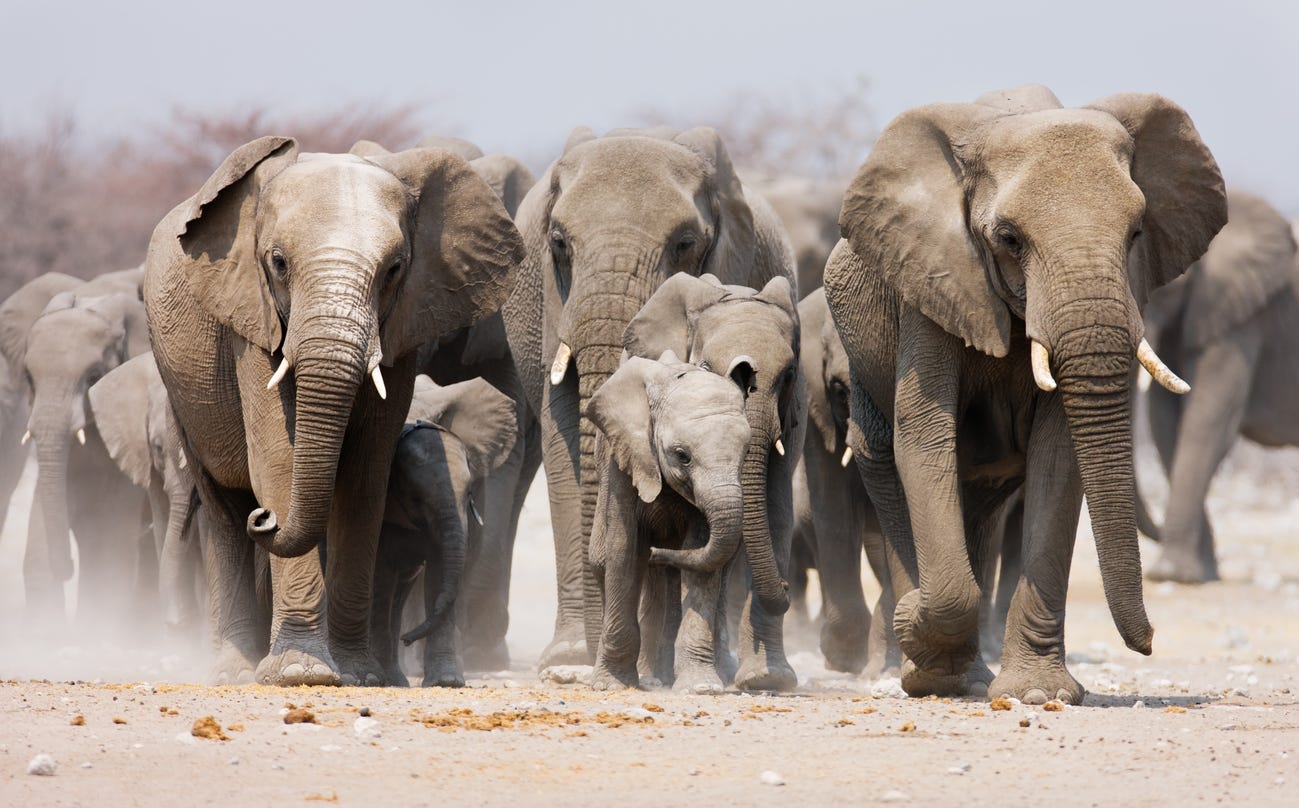
On 9 August, for the first time, Worldwork journalists joined the Open Forum in Nairobi both virtually and in person. This hybrid setup enabled us to weave together voices from around the world and from the heart of Kenya. The chosen theme—Intergenerational Conflicts: Fighting the Silence—speaks to a global reality: tensions between generations around voice, power, and responsibility are felt everywhere.
@foto credits to johan63 on istock
Fighting the Silence: Voices Across Generations from Nairobi
It is important to understand that Kenya has one of the youngest populations globally - around 80 percent of the population is below 35. This demographic tide means that the voices of youth—especially Gen Z—are not a minority but an important defining force.
In mid‑2024, Kenya erupted into mass protests when young people — mobilised online as Gen Z — took to the streets to oppose the controversial Finance Bill and broader economic management. Thousands stormed the Kenyan Parliament, resulting in dozens of deaths, many injured, and widespread unrest.
In June and July 2025, protests flared again in Nairobi following the mysterious death in police custody of blogger and teacher Albert Omondi Ojwang. Mass demonstrations against corruption, police brutality, and cost-of-living pressures swept across the capital, culminating in a citywide lockdown on 7 July (Saba Saba Day), pitting young demonstrators against heavily armed police. In that single day, at least 31 people were killed, over 100 injured, and more than 500 arrested.
Against this backdrop of intergenerational tension, national upheaval, and youthful fury, our Open Forum became a crucial space. It invited participants—from elders to Gen Z—to confront what it means to speak, to be heard, and to carry forward the shared responsability. What are the ghosts of power and silence about? How can we pass the baton without dropping it? These questions would surface in the voices that followed.
Breaking the Silence
For many, the forum felt like lifting a weight. “After the open forum, I feel relieved because I feel I've broken the silence,” wrote Mildred. Patricia echoed this sense: “Speaking openly about the tensions between generations felt like breaking through a wall that had been there for a long time.”
Others noticed how silence itself could hold meaning. Ilaria reflected: “About ‘fighting the silence,’ I believe it’s important to also stay with it and try to go beyond words.” Cynthia shared how, amid all the intensity, she “embraced the inner peace that the silence brought to listen to other beautiful voices.”
Even those who entered unsure found themselves shifted. “I got into process work blank… but I was made to understand that we’re not different. Quite the contrary. We’re one kind,” wrote Secret Santa.
Passing the Baton — Eldership and Responsibility
Many participants spoke of lineage — of what is handed down and what must be carried forward. Mildred used the image of a relay: “Just like in relays, they've passed the baton for me, and I have to ensure I pass the baton to you. Go on, son and shine with it. Make us proud.”
Everlyne Daisy stepped into her responsibility as Gen Z and/or millennial: “I accept the Eldership from my grandparents who fought for independence… I take responsibility and don’t want to blame the government all the time. I see how my ancestors’ wisdom can flow through me.”
Elders, too, spoke of wanting to be seen. “No! I was part of the fight for the rights that younger women in the UK now have,” said Philipa. “Ask me. I love learning from younger generations, witnessing your passion and your power. I feel all the roles in me — the young activist and also the elder.”
Pepa added from her own life: “Sometimes I feel like no one sees me, like we, the older people, don’t exist… but every age contributes: energy, strength, experience, passion. All of this together can make a difference.”
Others highlighted the need for humility across all sides. John Mutuku wrote: “Be proud of your generation, but don’t get stuck in the box. Extend a friendly arm to understand others while remaining authentic to your own.” And Belvin concluded: “My thinking has changed — every generation took part in building what we are now.”
Ghosts in the Room — Conflict, Betrayal, Power
The forum also surfaced anger, betrayal, and the shadows of systemic power. Sandra called for honoring “the people who lost their lives in the name of a collective ideal.”
Desmond described being triggered by blame but then “felt the ghost role of the government deepened and resonating with what I’m doing.” Stephie named another ghost: “The man in the suit, stealing the money, never having enough… seduced by power. Thinking of the ring in The Lord of the Rings.”
For Nadin, memories of protest returned with force: “Betrayal is when you see your idols refusing your right to speak because they need to be neutral. Neutral? With all those bodies?” Her words echoed the grief of many who felt silenced or abandoned by the “status quo.”
Generational impatience also surfaced. Ewan noted: “The older generation is the leave-it-to-God kind. But the younger gen is tired of waiting. It’s not a problematic gen — just not a quiet and obedient one.”
Perry wrote from an altered, poetic state, sensing the ghost of “technocracy and the people who control the narrative… How can we change toward leaders who are caregivers, sensitive wise eldership with empathy and authority?”
Glimpses of Hope and Togetherness
Amid the tensions, there was also a sense of unity and possibility. “The worries of older generations are relatable to the younger… fire from the young melting with calm from the older,” said TinTin Kuria.
Cynthia celebrated “the warmth and the calmness this whole process brought… fighting the silence while embracing peace.” Janet saw the way forward clearly: “If we allowed ourselves to learn from each generation without overlooking or invalidating their experiences, it would be a bold move forward.”
And Belvin perhaps captured the shift: “We are all one. We all suffer, and we all want better. We need to work together for a better tomorrow.”
Closing
Nobody would expect an Open Forum to resolve such a deep socio political tension like intergenerational conflict. What the Nairobi Open Forum did, it revealed it, deepened it, and allowed it to be voiced. Silence was broken — and at the same time re-discovered as a place of listening.
What remained was not consensus, but eldership or shared responsibility. As Philipa put it: “It’s a life and death situation.” And as the chorus of voices reminded us, the future can only be carried forward if generations walk together — youth and elders, grief and hope, silence and speech — passing the baton hand to hand.
Perhaps this is a beginning. What started in Nairobi could travel further to other places, where new voices and generations meet, listen, and learn from one another.
If you are interested in join forces in that, let’s talk.
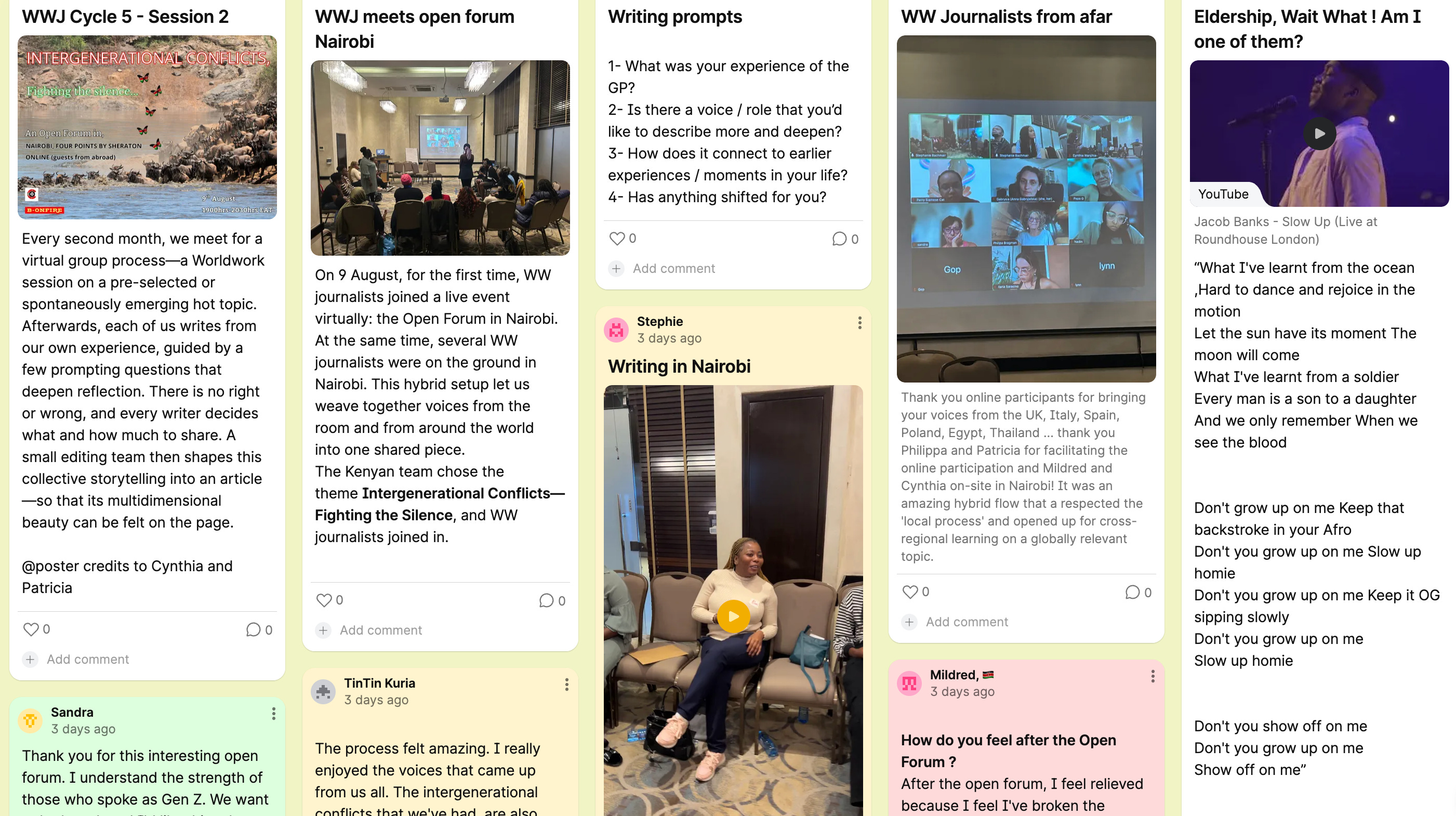
Link to padlet - with the original writings of the participants.
As a reader, you are also invited to share your perspective on the topics or delve deeper into the aspects discussed by participants, in the comments, here on Substack, below.
Thank you to all Worldwork Journalists involved in this conversation and sharing their personal experience. And a special thanks to Perry for helping building the padlet.
And you, dear reader, which voice speaks to you? What is this topic, and what are our shared voices evoking in you? Is any insight coming up?
We are looking forward to engaging with you in the comment section!
Apart from commenting below, we invite you to read and join the conversation here on Substack regularly by subscribing. We are grateful for every comment, as it enriches our conversations and supports this tender plant's growth.
About 🌏 Worldwork
Worldwork is an application of Processwork also known as process-oriented psychology. As a psychological and conflict-resolution approach developed by Arnold Mindell in the 1970s, it's based on the principles of Jungian psychology, Taoism, and systems theory, and it is used in various settings, including therapy, organizational development, community building, and conflict resolution. At its core, Worldwork aims to explore and understand both individual and collective processes in order to address conflicts, promote personal growth, and create more harmonious relationships within groups and communities. It focuses on bringing awareness to marginalized or ignored perspectives, as well as the deeper layers of consciousness within individuals and groups.
Editors of this space
Cynthia Wanjihia is a passionate Process Work student as well as a Cyber Security student. She is open minded in world work as well as inter-generational relationships hoping to relate to all and create a safe space to feel heard and share their story.
Stephanie Bachmair (B.ONFIRE/DD Alliance) is a communication enthusiast, facilitator, leadership coach, and process work diplomat. She supports individuals, teams, and organizations to explore and craft their stories, tell them with impact, relate to their audience, and increase their transformative power through dialogue and deep democracy facilitation.
If you want more
The spirit of the Land and the Force of Dreaming - A process-work intensive in Vilnius, Lithuania, from the 6th to 12th of October by Deep Democracy Institute International.
If you want to get inspired around leadership, deep democracy and/or transformational storytelling, and be informed about further happenings, you can also subscribe to our monthly B.ONFIRE newsletter
For professional updates on leadership, storycrafting, and deep democracy facilitation, check our website www.b-onfire.com, and other social media channels: https://linktr.ee/b_onfire

Thanks for reading Worldwork Journalism! Subscribe for free to receive new posts and support our work.